MADRID — The Museo Nacional Centro de Arte Reina Sofía has unveiled a landmark exhibition that promises to redefine the narrative of 20th-century art through the lens of pioneering women artists. Titled "Invisible No More: Women at the Vanguard," the retrospective brings together over 150 works from more than 40 artists who challenged conventions, shattered glass ceilings, and carved out spaces for female expression in a male-dominated art world. The exhibition, which opened last week, is already being hailed as a corrective to historical oversight, offering a panoramic view of creativity that has long been marginalized or outright ignored.
Spanning from the early 1900s to the late 1970s, the show covers a tumultuous period in history marked by wars, social upheavals, and artistic revolutions. Yet, as the curators argue, the contributions of women during this time have often been relegated to footnotes. "These artists were not just participants; they were innovators, risk-takers, and visionaries who shaped modern art as we know it," said Dr. Elena Martínez, the lead curator. "Their absence from mainstream canon is not an accident but a result of systemic exclusion. This exhibition is an attempt to restore their rightful place."
The exhibition is organized not strictly chronologically but thematically, allowing visitors to trace dialogues across time and geography. One section, "Bodies and Boundaries," explores how artists like Frida Kahlo, Louise Bourgeois, and Hannah Höh used their work to interrogate notions of identity, sexuality, and the female form. Kahlo's visceral self-portraits, Bourgeois's haunting sculptures, and Höh's provocative photomontages are displayed in conversation, revealing a shared preoccupation with the body as a site of political and personal struggle.
Another compelling segment, "Abstraction as Rebellion," highlights artists who embraced non-representational forms to break free from patriarchal constraints. Here, the bold geometric paintings of Hilma af Klint—created years before Kandinsky's supposed invention of abstraction—take center stage, alongside the vibrant canvases of Sonia Delaunay and the minimalist precision of Agnes Martin. These works not only demonstrate technical mastery but also a defiant rejection of figurative traditions that often objectified women.
The political dimension of these artists' work is foregrounded in the section "Activism and Aesthetics," which features creators who merged art with social commentary. Photographer Dorothea Lange's iconic images of Depression-era America are paired with the militant posters of the Guerrilla Girls and the conceptual performances of Yoko Ono, illustrating how women used art as a tool for advocacy and change. "For many of these artists, aesthetics were inseparable from ethics," noted Dr. Martínez. "They believed that art could—and should—transform society."
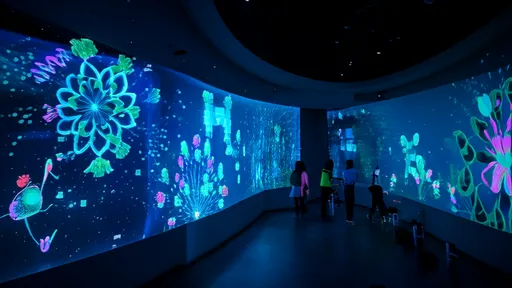
Technological innovation also finds its place in the exhibition, particularly in the segment "New Media, New Voices." Pioneers like video artist Nam June Paik's collaborator Shigeko Kubota and multimedia experimenter Carolee Schneemann are celebrated for their groundbreaking use of video, performance, and installation. Their work not only expanded the definition of art but also democratized its production, challenging the elitism of the art establishment.
What sets this retrospective apart is its global perspective. While Western artists are well-represented, the curators have made a concerted effort to include non-European voices, such as Japanese surrealist Eiko Yamazawa, Lebanese painter Etel Adnan, and Nigerian modernist Clara Ugbodaga-Ngu. This inclusivity underscores the universality of the struggle for recognition while honoring the unique cultural contexts that shaped each artist's vision.
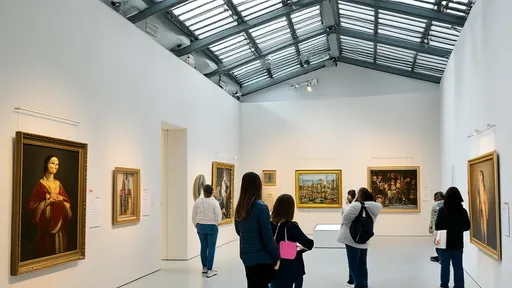
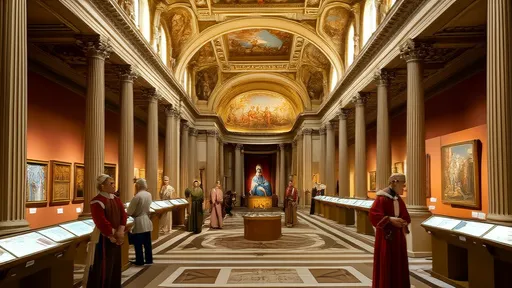
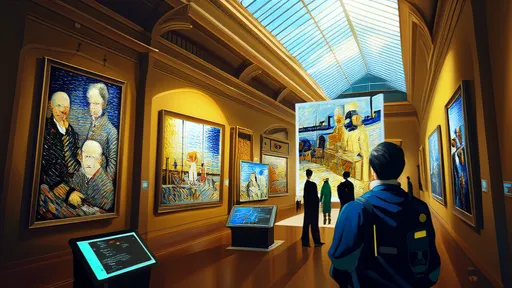
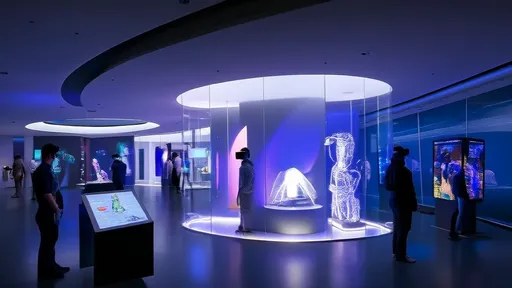
The exhibition design itself is a feat of thoughtful curation. Rather than isolating artists, the layout encourages connections, with works arranged in clusters that suggest informal salons or collaborative spaces. Wall texts are minimal, allowing the art to speak for itself, while an audio guide features commentary from contemporary women artists reflecting on their predecessors' legacies. "We wanted to create an immersive experience, almost like stepping into a hidden history that has been there all along," explained exhibition designer María López.
Public response has been overwhelmingly positive, with long lines forming daily and tickets selling out weeks in advance. "I’ve studied art history for years, but I’m discovering names I’ve never heard before," said Sofia Ramirez, a university student visiting the exhibition. "It’s exhilarating and also infuriating—why weren’t we taught about these women?"
Complementing the main show is a series of public programs, including lectures, film screenings, and workshops aimed at fostering dialogue about gender and creativity. The museum has also partnered with local schools to develop educational materials that incorporate these artists into curricula, ensuring that the impact of the exhibition extends beyond its run.
Critics have praised the Reina Sofía for undertaking such an ambitious project. "This is more than just an exhibition; it’s a act of historical justice," wrote ArtReview’s Javier Menéndez. "By devoting its resources and space to these overlooked masters, the museum is setting a new standard for what cultural institutions can and should do."
As the art world continues to grapple with issues of representation and equity, "Invisible No More" serves as both a celebration and a challenge. It celebrates the brilliance, resilience, and diversity of women artists while challenging viewers to reconsider long-held assumptions about who gets to be called a pioneer. The exhibition runs through next spring, and if early indicators are any sign, its influence will be felt for years to come.
Practical Information: "Invisible No More: Women at the Vanguard" is on view at the Museo Nacional Centro de Arte Reina Sofía in Madrid until April 15. Timed-entry tickets are required and can be reserved online. The museum is open Monday through Saturday from 10 a.m. to 9 p.m., and Sundays from 10 a.m. to 7 p.m.
By /Sep 11, 2025
By /Sep 11, 2025
By /Sep 11, 2025
By /Sep 11, 2025

By /Sep 11, 2025
By /Sep 11, 2025
By /Sep 11, 2025
By /Sep 11, 2025
By /Sep 11, 2025
By /Sep 11, 2025

By /Sep 11, 2025
By /Sep 11, 2025
By /Sep 11, 2025
By /Sep 11, 2025
By /Sep 11, 2025
By /Sep 11, 2025
By /Sep 11, 2025
By /Sep 11, 2025

By /Sep 11, 2025

By /Sep 11, 2025
