In the vast and varied landscape of contemporary art, a powerful movement is emerging from the studios and communities of Indigenous artists across Canada. These creators are not merely producing aesthetically pleasing objects; they are engaging in a profound dialogue that weaves ancestral knowledge with pressing modern concerns. Through mediums deeply rooted in tradition—such as beadwork, quillwork, carving, and textile arts—they are crafting responses to issues like environmental degradation, cultural reclamation, and social justice. This artistic practice serves as both a testament to resilience and a forward-looking vision for healing and understanding.
The materials and methods employed are themselves statements of continuity and adaptation. For generations, Indigenous artisans have worked with porcupine quills, moose hair, birch bark, and sweetgrass, materials gifted by the land. Today, these very substances become the vocabulary for discussing that land’s fragility. A beaded map tracing the path of an oil pipeline, or a quilt patterned with the changing migration routes of caribou, transforms a traditional craft into a potent infographic on ecological loss. The time-intensive, meticulous nature of this work—each bead sewn by hand, each quill dyed and flattened—mirrors the patient, careful attention required to mend our relationship with the natural world. It is a slow art for a crisis that demands slow, thoughtful solutions.
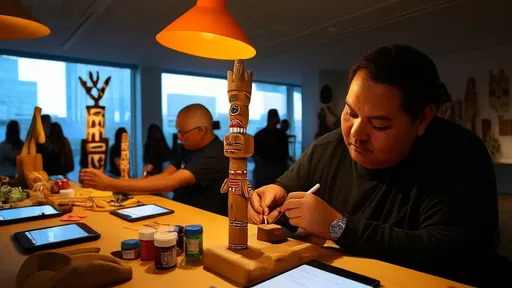
Beyond environmentalism, the work is a crucial act of cultural reclamation. The oppressive legacy of residential schools and colonial policies aimed to sever the connection between Indigenous peoples and their languages, spiritual practices, and artistic traditions. In picking up needles and knives, in learning patterns from elders and innovating upon them, artists are directly countering this history of erasure. A jingle dress, created for a healing dance, becomes a symbol of community recovery. A carved mask, depicting a tangled figure of a residential school survivor, uses the form of traditional transformational masks to tell a story of historical trauma and the path toward healing. This art does not live in a museum display case; it is active, ceremonial, and integral to the process of decolonization.
The gallery and museum world, once a space that often marginalized or misrepresented Indigenous art, is now being challenged and reshaped by these artists. They are curating their own exhibitions, writing their own wall texts, and insisting on the right to contextualize their work within their own cultural frameworks. This shift rejects the anthropological gaze that long treated these artworks as artifacts of a vanishing past. Instead, they are presented unequivocally as contemporary art, made by living artists engaging with a living culture. This reclamation of narrative power is as significant as the reclamation of the artistic practices themselves.
Furthermore, the circulation of these artworks creates new economic pathways within Indigenous communities. By achieving critical and commercial success in the international art market, artists are able to sustain their practice, support their families, and fund community initiatives. This economic empowerment is a direct response to systemic poverty and disenfranchisement. The sale of a piece is not just a transaction; it is an investment in cultural continuity and community self-determination. Cooperatives and collectives run by and for Indigenous artists ensure that this value stays within the community, fostering a new generation of makers.
Ultimately, the work of these artists transcends the boundaries of the art world. It functions as education for non-Indigenous audiences, offering a window into worldviews that emphasize reciprocity, balance, and respect for all beings. It is a form of diplomacy, building bridges of empathy and understanding where politics often fails. And for Indigenous communities, it is a source of immense pride, a visual affirmation that their cultures are not historical footnotes but vibrant, dynamic forces equipped to navigate the complexities of the 21st century and offer wisdom essential for our collective future.
In every stitch, stroke, and sculpted form, Canadian Indigenous artists are demonstrating that tradition is not the opposite of innovation. It is, rather, a foundation from which to build a more thoughtful and just world. Their art is a quiet but unassailable force, reminding us that some of the most urgent contemporary conversations are best held in the language of the ancestors.
By /Sep 11, 2025
By /Sep 11, 2025
By /Sep 11, 2025
By /Sep 11, 2025
By /Sep 11, 2025
By /Sep 11, 2025
By /Sep 11, 2025
By /Sep 11, 2025
By /Sep 11, 2025
By /Sep 11, 2025

By /Sep 11, 2025
By /Sep 11, 2025
By /Sep 11, 2025
By /Sep 11, 2025

By /Sep 11, 2025
By /Sep 11, 2025
By /Sep 11, 2025
By /Sep 11, 2025
By /Sep 11, 2025

By /Sep 11, 2025
