In the world of cinema, where every frame is meticulously crafted to tell a story, the role of music cannot be overstated. Among the many fascinating challenges that composers face, one stands out for its unique blend of creativity and constraint: the task of creating a compelling film score in just five minutes. This concept, though seemingly paradoxical, has gained traction in both experimental circles and mainstream filmmaking, pushing artists to distill emotion, narrative, and atmosphere into a fleeting auditory experience. The idea isn't merely about speed but about capturing the essence of a scene or an entire film in a condensed, powerful burst of sound. It demands an intimate understanding of musical theory, emotional resonance, and the symbiotic relationship between audio and visual elements.
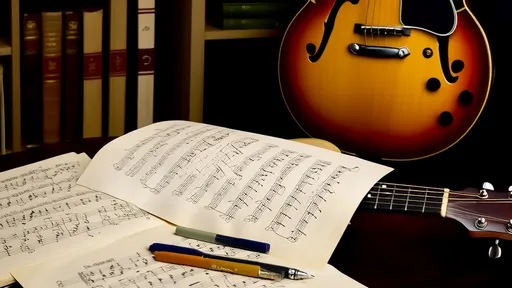
To appreciate the depth of this challenge, one must first understand the traditional process of scoring a film. Typically, a composer spends weeks or even months developing themes, orchestrating pieces, and synchronizing music with the director's vision. This involves countless revisions, collaborations with musicians, and technical adjustments to ensure every note enhances the storytelling. In contrast, a five-minute composition sprint strips away the luxury of time, forcing the composer to rely on instinct, experience, and raw creativity. It's akin to a musical improvisation session but with the added pressure of serving a specific cinematic purpose. The result is often a piece that feels immediate, visceral, and surprisingly cohesive, as if the constraints themselves fuel innovation.
The origins of this practice can be traced back to avant-garde and indie film communities, where limited budgets and tight schedules necessitated rapid creative solutions. However, it has since evolved into a respected exercise among established composers. Legends like Hans Zimmer and John Williams have spoken about the value of spontaneous composition, noting how time pressures can unlock unexpected ideas. In workshops and masterclasses, emerging musicians are often given five-minute challenges to sharpen their skills, emphasizing the importance of quick decision-making and emotional intuition. This approach not only hones technical abilities but also fosters a deeper connection to the narrative heart of a project.
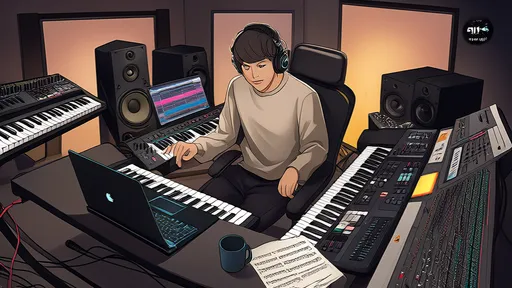
So, how does one actually create a film score in five minutes? The process begins long before the timer starts, with mental preparation and a toolkit of musical motifs. Composers often draw from a personal library of themes, rhythms, and harmonic progressions that can be adapted on the fly. They might also use technology to their advantage, leveraging digital audio workstations (DAWs) with pre-set sounds and loops to accelerate production. However, the true magic lies in their ability to listen—to the silence between dialogues, the rhythm of editing, and the emotional arc of characters. In five minutes, they must identify key moments where music will have the most impact, whether it's a subtle underscore for a tense scene or a sweeping melody for a climactic reveal.
The emotional impact of a five-minute score is profound precisely because of its brevity. In a world where audiences are bombarded with sensory input, a short, potent musical piece can cut through the noise and leave a lasting impression. Think of iconic film moments where a brief musical sting elevates suspense or a fleeting harmonic shift brings tears to viewers' eyes. The five-minute constraint forces composers to focus on purity of emotion, eliminating unnecessary complexity and honing in on what truly matters. This minimalist approach can result in scores that are more memorable than hours of orchestration, proving that sometimes, less really is more.
Technology has played a pivotal role in making this rapid composition feasible. With advancements in AI-assisted tools and real-time collaboration software, composers can now experiment and iterate at unprecedented speeds. Programs like Spitfire Audio or Native Instruments offer vast libraries of sounds that can be manipulated instantly, allowing for quick layering and mixing. Moreover, cloud-based platforms enable composers to work seamlessly with directors across the globe, receiving feedback and making adjustments in minutes rather than days. This democratization of tools has empowered a new generation of filmmakers and musicians to explore the five-minute score, blurring the lines between professional and amateur创作.
Despite its advantages, the five-minute approach is not without critics. Some argue that it undermines the artistry and depth of traditional composition, reducing music to a quick fix rather than a thoughtfully crafted element. They worry that over-reliance on speed could lead to homogenized sounds, as composers default to familiar tropes and patterns under pressure. However, proponents counter that the constraint is merely a different form of artistry—one that values spontaneity and emotional authenticity over perfectionism. In many ways, it mirrors the improvisational nature of jazz or the raw energy of punk rock, where imperfections are embraced as part of the creative expression.
Looking ahead, the concept of the five-minute film score is likely to grow in relevance. As content consumption shifts toward short-form media—think TikTok, Instagram Reels, or YouTube shorts—the demand for quick, impactful music will only increase. Composers who master this skill will find themselves at the forefront of a new era in storytelling, where adaptability and speed are as important as technical prowess. Furthermore, as AI continues to evolve, we may see hybrid approaches where human creativity is augmented by machine efficiency, leading to scores that are both rapidly produced and deeply nuanced.
In conclusion, the challenge of creating a film score in five minutes is more than a gimmick; it's a testament to the power of constraints in fostering innovation. By compressing the creative process, composers are forced to tap into their deepest instincts, producing work that is immediate, emotional, and unforgettable. Whether used as a training exercise or a legitimate production technique, this approach highlights the enduring magic of music in cinema—its ability to convey what words and images cannot, in any amount of time. As the boundaries of filmmaking continue to expand, the five-minute score will remain a vibrant and essential part of the artistic landscape.

By /Aug 22, 2025

By /Aug 22, 2025

By /Aug 22, 2025
By /Aug 22, 2025
By /Aug 22, 2025
By /Aug 22, 2025
By /Aug 22, 2025

By /Aug 22, 2025
By /Aug 22, 2025

By /Aug 22, 2025
By /Aug 22, 2025
By /Aug 22, 2025
By /Aug 22, 2025

By /Aug 22, 2025
By /Aug 22, 2025
By /Aug 22, 2025
By /Aug 22, 2025
By /Aug 22, 2025
By /Aug 22, 2025

By /Aug 22, 2025
